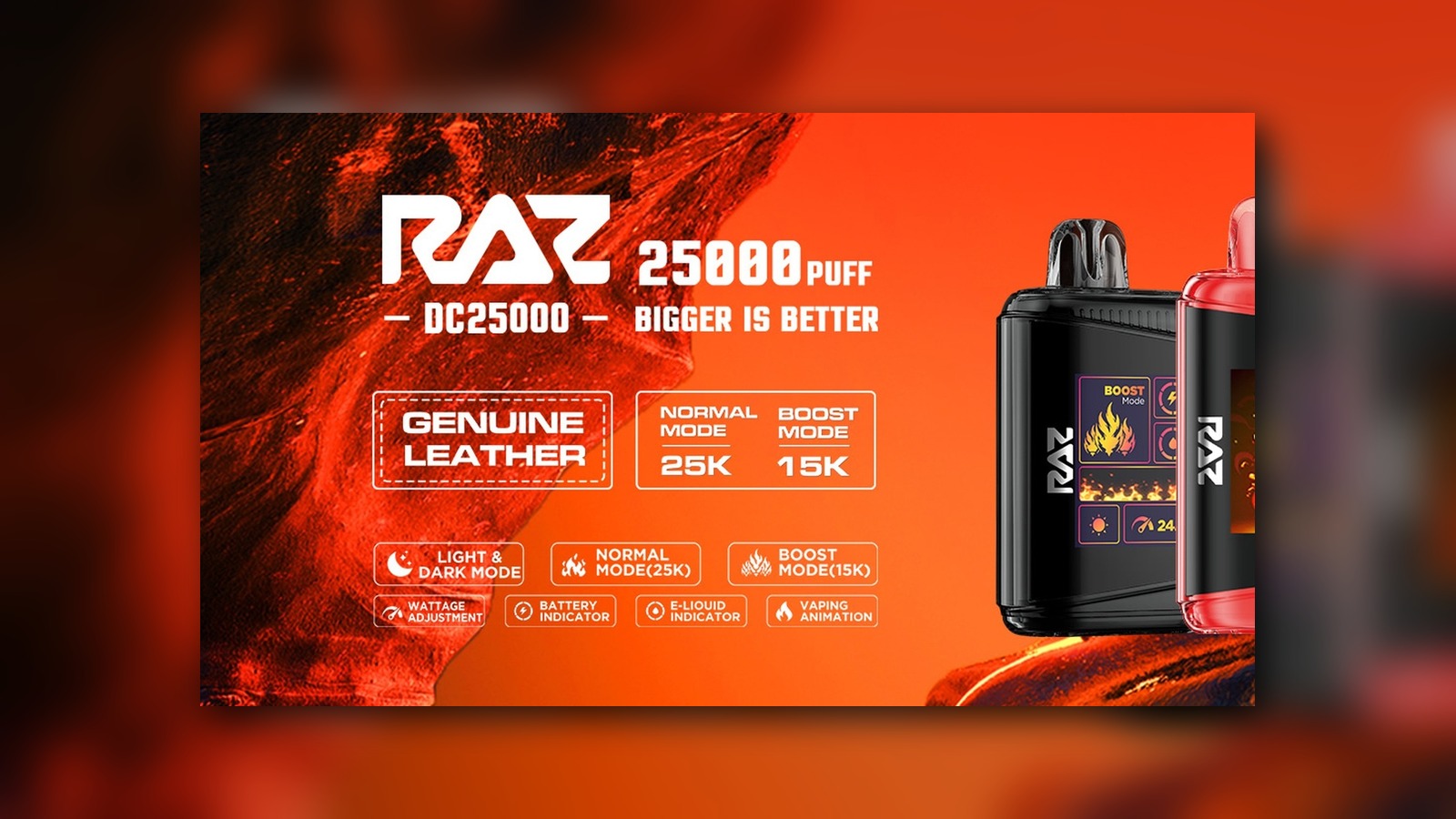
Updated 15 July 2026. Evidence disclosure: This is a source-led naming and claim review. VapeRisk did not receive, open, use, charge, disassemble or test a RAZ LTX 25K, DC25000 or DC25K for this page. The current RAZ public catalogue, a linked RAZ media page and the RAZ authentication workflow were reviewed. They do not establish that all three labels identify the same product.
Quick answer: VapeRisk cannot currently verify that RAZ LTX 25K, RAZ DC25000 and RAZ DC25K are equivalent names for one device. The RAZ product catalogue captured on 15 July 2026 lists multiple DC25000-labelled entries and one DC25K-labelled entry, but contains no LTX or LTX 25K text and no statement connecting the names. Retailer wording, similar images, search-result mixing and DC25K-named asset paths are useful clues, not product-identity proof. Until RAZ publishes an explicit model page, manual, technical sheet or package bridge, specifications and instructions must remain attached to the exact label and source that states them.
RAZ naming evidence profile
| Question | Current evidence | Safe conclusion |
|---|---|---|
| Does RAZ list DC25000? | Yes. The public catalogue contains several DC25000-labelled edition and flavor entries. | DC25000 is a label used on the captured RAZ catalogue. |
| Does RAZ list DC25K? | Yes. The catalogue contains a DC25K-labelled flavor entry. | DC25K is also a label used on the captured catalogue. |
| Does RAZ list LTX 25K? | No LTX or LTX 25K text was found in the directly captured catalogue. | The current source does not establish an official LTX label. |
| Does RAZ say DC25000 equals DC25K? | No explicit identity, alias, edition or succession statement was captured. | The relationship remains unresolved. |
| Does RAZ say LTX 25K equals either DC label? | No first-party bridge was captured. | Do not present the names as interchangeable. |
| Are exact specifications established? | No exact technical table or manual tying the three labels together was captured. | Battery, liquid, puff, screen and mode fields remain unresolved here. |
| Is there an official verification route? | RAZ provides a scratch, QR and authentication-code workflow. | The workflow can check a code; it does not prove every product claim or seller. |
What kind of review is this?
This page reviews the evidence around a naming problem. It does not turn retailer consensus into manufacturer documentation and it does not score a product that VapeRisk has not tested. The previous numeric rating, scorecard and Review schema have been removed because no traceable sample, declared test method or verified identity bridge supported them.
The useful reader task is narrower and more defensible: determine what RAZ currently publishes, what the official pages omit, which public claims are still disputed and what evidence a buyer should request before treating two listings as the same product.
What the current RAZ catalogue actually shows
The captured RAZ catalogue includes entries labelled DC25000 FIRE&ICE edition, RAZ DC25000 4 New Flavor, RAZ DC25000 Frozen Edition and RAZ DC25000 3 New Flavor. It also includes a separate entry labelled DC25K 5 new Flavor-0617.
This is enough to say that both DC25000 and DC25K labels appear on the same public RAZ catalogue. It is not enough to say that one is a nickname, replacement name, shortened form, edition or identical SKU. The catalogue does not publish that explanation, a model matrix or a technical sheet connecting the entries.
Why DC25K asset paths do not prove equivalence
A RAZ catalogue entry labelled DC25000 links to a media page whose image paths include a DC25K directory name. That implementation detail is relevant because it shows the two strings coexist inside a RAZ-operated web surface. It still does not define the relationship between them.
Asset folders can reflect internal naming, production history, site organization or shorthand. Without an explicit first-party statement, they cannot establish that every DC25000 listing is a DC25K, that specifications are shared, or that package and market variants are interchangeable. VapeRisk records the clue but does not promote it into a product fact.
What is missing for the LTX 25K label?
The directly captured catalogue contains no LTX text. A bounded exact-domain search for RAZ LTX 25K returned no organic result from the known RAZ domain. This does not prove that no LTX-labelled product or package exists anywhere. It means the evidence set used here does not provide a current first-party bridge.
Retailer pages and review results often place LTX 25K beside DC25000. That co-occurrence explains why shoppers search the names together, but retailers are not a substitute for a RAZ model page, manual, package image with a traceable source, technical sheet or support statement. The correct answer remains unresolved, not “same” and not “different.”
Which specifications can VapeRisk verify?
None of the disputed product fields can be safely assigned across all three labels from the current first-party package. The RAZ catalogue and linked media page captured for this update do not provide a readable exact technical table connecting LTX 25K, DC25000 and DC25K.
VapeRisk therefore does not select between competing public claims for liquid capacity, battery capacity, puff count, screen type, Normal or Boost behavior, charging connector, airflow, coil design or dimensions. Those fields require an exact-label first-party source or a traceable retail sample and declared measurement method. The battery capacity versus puff-count guide explains why a headline number cannot substitute for measurement.
Why the manual and control questions remain unanswered
Search data shows a small exact task around a DC25000 manual, instructions, modes, empty-state detection and reset. The checked search results mix DC25000 and LTX 25000 wording, use third-party guidance and do not contain a known first-party RAZ manual result.
That makes the task real but the answer unsafe to improvise. This page does not publish button sequences, reset steps, mode controls, screen meanings, charging procedures or empty-device indicators. Follow documentation supplied with the exact package and do not transfer instructions between labels until RAZ defines their relationship.
What RAZ authentication can and cannot establish
RAZ publishes an authentication page that accepts an authentication code and describes a scratch-and-scan workflow. Use the current official domain reached from RAZ’s own public site, inspect the destination before entering a code and do not publish the complete code or package identifier.
A manufacturer-run result may help check a code against that system. It does not prove that LTX 25K, DC25000 and DC25K are the same model, certify a seller, establish legal sale, guarantee safety, confirm specifications or prove that every component is unchanged. The counterfeit-product guide explains how to keep the listing, receipt, package, code result and seller identity as separate evidence layers.
How to evaluate a RAZ 25K listing
- Record the exact written label. Keep LTX 25K, DC25000 and DC25K distinct rather than silently normalizing them.
- Match the package and listing. Compare the printed model, edition, images, flavor and identifiers. A mismatch is unresolved, not automatic proof of a counterfeit.
- Request the exact specification source. Ask for a current manual, technical sheet or package panel tied to that label.
- Separate claims from measurements. Puff, battery and liquid numbers are not VapeRisk findings without a traceable sample and method.
- Keep instructions model-specific. Do not borrow controls, reset steps or screen meanings from a similar-looking RAZ device.
- Preserve purchase evidence. Save the listing, receipt, seller identity, package and complete verification result together.
- Check market status separately. Identity, authenticity, authorization, legal sale, safety and performance are different questions.
Related RAZ and evidence owners
The RAZ TN9000 review is a separate exact-model owner and cannot fill LTX/DC25000 gaps. For broader evidence handling, see how to read a vape label, the battery-safety checklist and the Claimed vs Measured dataset.
Frequently asked questions
Are RAZ LTX 25K and RAZ DC25000 the same device?
Current first-party evidence reviewed here does not prove that relationship. Retailer and search-result co-occurrence cannot replace an explicit RAZ model page, manual, technical sheet or package bridge.
Are RAZ DC25000 and DC25K the same product?
The current RAZ catalogue uses both labels, and a DC25000-linked media page contains DC25K-named asset paths. RAZ does not explicitly define the relationship in the captured sources, so equivalence remains unresolved.
Does the official RAZ catalogue list LTX 25K?
No LTX or LTX 25K text was found in the catalogue captured on 15 July 2026. That is a dated source finding, not proof that the label cannot exist elsewhere.
What are the verified RAZ LTX 25K or DC25000 specifications?
The current source set does not provide an exact first-party technical table connecting the labels. VapeRisk therefore leaves puff, battery, liquid, screen, mode, charging and dimension claims unresolved.
Where is the official RAZ DC25000 manual?
No exact first-party manual or support result was found in the bounded check used for this update. Third-party instructions should not be transferred across labels without exact-model documentation.
Did VapeRisk test a RAZ LTX 25K or DC25000?
No. This is a source-led naming and claim review. VapeRisk did not have a documented retail sample, package, lot, authentication code or test protocol for this update.
Can a RAZ authentication result prove the seller is legitimate?
No. It may help check a code against the RAZ system, but it does not certify the seller, legal sale, safety, authorization, product condition, naming relationship or every specification.
Source ledger
- RAZ public product catalogue – checked 15 July 2026 for DC25000 and DC25K labels and the absence of an explicit LTX/name-equivalence statement.
- RAZ-linked product media page – checked for the DC25K-named asset-path context. The page does not publish an identity bridge or exact technical table.
- RAZ authentication page – checked for the scratch, QR, code-entry and counterfeit-reporting workflow. No code was submitted.