Quick answer: The BAT Vuse 2026 results show a sharp regional split in British American Tobacco’s vape business for the first half of the year. At constant exchange rates, U.S. Vapour revenue rose 19.8%, while the Americas and Europe (AME) region fell 13.9% and Asia-Pacific, Middle East and Africa (APMEA) fell 28.2%. BAT also said it plans a controlled U.S. rollout of selected “adult-focused” Vuse flavours in the second half of 2026.
Important source note: These are BAT-reported financial and market-share figures, not independent VapeRisk measurements. BAT says its share figures cover selected tracked retail channels and use internal estimates.
| H1 2026 signal | BAT-reported result | How to read it |
|---|---|---|
| Global Vapour revenue | £775 million at constant exchange rates, up 5.3% | Group growth returned, but regional performance was uneven. |
| U.S. Vapour revenue | £519 million at constant exchange rates, up 19.8% | BAT attributes the gain to higher volume, price/mix, competitor changes and state enforcement progress. |
| U.S. Vuse value share | 55.9%, up 4.1 percentage points | BAT internal estimate for closed-system consumables in tracked channels, not the entire U.S. vape market. |
| AME Vapour revenue | £230 million at constant exchange rates, down 13.9% | BAT says regulatory changes in Poland were a major factor. |
| APMEA Vapour revenue | £26 million at constant exchange rates, down 28.2% | Shows that the U.S. recovery did not extend across every BAT region. |
| Next U.S. move | Selected “adult-focused” Vuse flavours planned for H2 2026 | A company rollout plan is not the same as product-specific U.S. Food and Drug Administration (FDA) marketing authorization. |
What do the BAT Vuse 2026 results show in the United States?
BAT published its half-year report on July 30, 2026 for the six months ended June 30. The company reported U.S. Vapour revenue of £501 million at current exchange rates, up 15.6%, or £519 million at constant exchange rates, up 19.8%. U.S. Vapour volume rose 14.9% to 141 million units.
BAT also said Vuse increased its value share by 4.1 percentage points to 55.9% in U.S. tracked channels. The report defines this as Vuse share of closed-system consumables in measured retail channels. It should not be read as Vuse holding 55.9% of every U.S. vape sale, particularly sales outside the channels BAT tracks.
The company attributed the U.S. improvement to higher volume and price/mix. It also pointed to changes in the competitor landscape during the second half of 2025 and progress in state-level enforcement against illicit single-use vapour products. Those are BAT’s explanations; the report does not independently isolate how much of the gain came from each factor.
Did BAT’s vape business grow in every region?
No. Group Vapour revenue rose 5.3% at constant exchange rates to £775 million, and global volume rose 4.2% to 263 million units. The regional table shows that U.S. growth carried the category while other regions contracted.
In AME, which BAT uses for its Americas and Europe region, Vapour revenue fell 13.9% at constant exchange rates to £230 million. BAT said the decline was largely due to regulatory changes in Poland. In APMEA, Vapour revenue fell 28.2% at constant exchange rates to £26 million, while volume fell 20.2%.
This regional split matters because a global growth headline can hide different market conditions. Enforcement, channel mix, regulation, product availability and competition can move a closed-system brand in different directions at the same time.
What does BAT’s planned Vuse flavour rollout mean?
BAT said it plans a disciplined U.S. rollout of a selected range of “adult-focused” Vuse flavours during the second half of 2026. That phrase is BAT’s own description. The half-year report does not name the flavours, give a launch date or identify the exact product records that would support market status.
A commercial rollout plan also does not create FDA authorization. U.S. marketing status is product-specific, so the exact device, pod, flavour and nicotine strength need to be checked against FDA records. VapeRisk maintains a separate FDA-authorized vape owner page for that verification boundary.
Why does the U.S. market-share claim need context?
BAT’s 55.9% figure is useful as a directional company disclosure, but it has three limits:
- It is an internal estimate reported by BAT.
- It covers tracked channels and closed-system consumables, not every legal or illicit vape transaction.
- It compares with BAT’s full-year 2025 reference point rather than providing a complete independent market series.
For retailers and competing brands, the stronger signal is the combination of measured-channel share, reported revenue and volume. All three moved up in the U.S., while BAT’s figures moved down in AME and APMEA. That is a clearer market split than a single share number on its own.
VapeRisk risk read
The report suggests that enforcement and channel access can redistribute measured sales toward established closed systems without proving that total vape demand has grown. A brand may gain in tracked legal retail while illicit or untracked channels remain material.
For brands, the practical question is whether a product has exact-SKU authorization evidence and distribution reach. For retailers, it is whether a familiar brand name is being used to imply status for an unverified variant. The Vape Compliance & Market hub and VapeRisk’s FDA enforcement-priorities brief keep authorization and enforcement language separate.
What remains unverified?
- VapeRisk did not independently reproduce BAT’s revenue, volume or tracked-channel share estimates.
- The report does not quantify how much U.S. growth came from enforcement, competitor changes, price/mix or underlying consumer demand.
- BAT did not identify the planned Vuse flavours, exact launch dates or product-specific authorization records in the half-year announcement.
- The results do not establish product safety, comparative health effects or performance for any Vuse device or pod.
What should brands and retailers watch next?
- Which exact Vuse products BAT introduces in the United States during H2 2026.
- Whether FDA’s public product records match every device, pod, flavour and nicotine strength used in rollout claims.
- Whether U.S. Vapour revenue growth continues after the competitor and inventory comparisons become harder.
- Whether Poland-related regulation continues to weigh on BAT’s AME Vapour results.
- Whether measured-channel gains translate into broader legal-market growth rather than only share redistribution.
Related VapeRisk coverage
- FDA-Authorized Vapes 2026: What “FDA Approved” Really Means
- FDA ENDS Enforcement Priorities Put Retailers Back on Notice
- Retail Shelf Risk Is the New Vape Media Beat
- Vape Compliance & Market
FAQ
What did BAT report for U.S. Vuse in the first half of 2026?
BAT reported U.S. Vapour revenue of £519 million at constant exchange rates, up 19.8%, and said Vuse value share in tracked U.S. closed-system channels rose 4.1 percentage points to 55.9%.
Did BAT’s Vapour revenue grow in every region?
No. BAT reported global Vapour revenue up 5.3% at constant exchange rates, but AME Vapour revenue fell 13.9% and APMEA Vapour revenue fell 28.2%. U.S. growth drove the group increase.
Are BAT’s Vuse market-share figures independent market data?
No. BAT identifies the share figures as internal estimates for selected tracked channels. They are useful company disclosures but do not measure every U.S. legal, illicit or untracked vape sale.
Does BAT’s planned Vuse flavour rollout mean those products are FDA-authorized?
No. A company rollout plan is not FDA marketing authorization. U.S. status must be checked for the exact device, pod, flavour and nicotine strength in FDA records.
Sources
- BAT Results Centre: HY 2026 materials, published July 30, 2026
- British American Tobacco, Half-Year Report for the six months to June 30, 2026
Editorial disclosure: This report uses BAT’s public financial materials and was not sponsored by BAT or Vuse. VapeRisk received no product, payment or pre-publication input for this article.
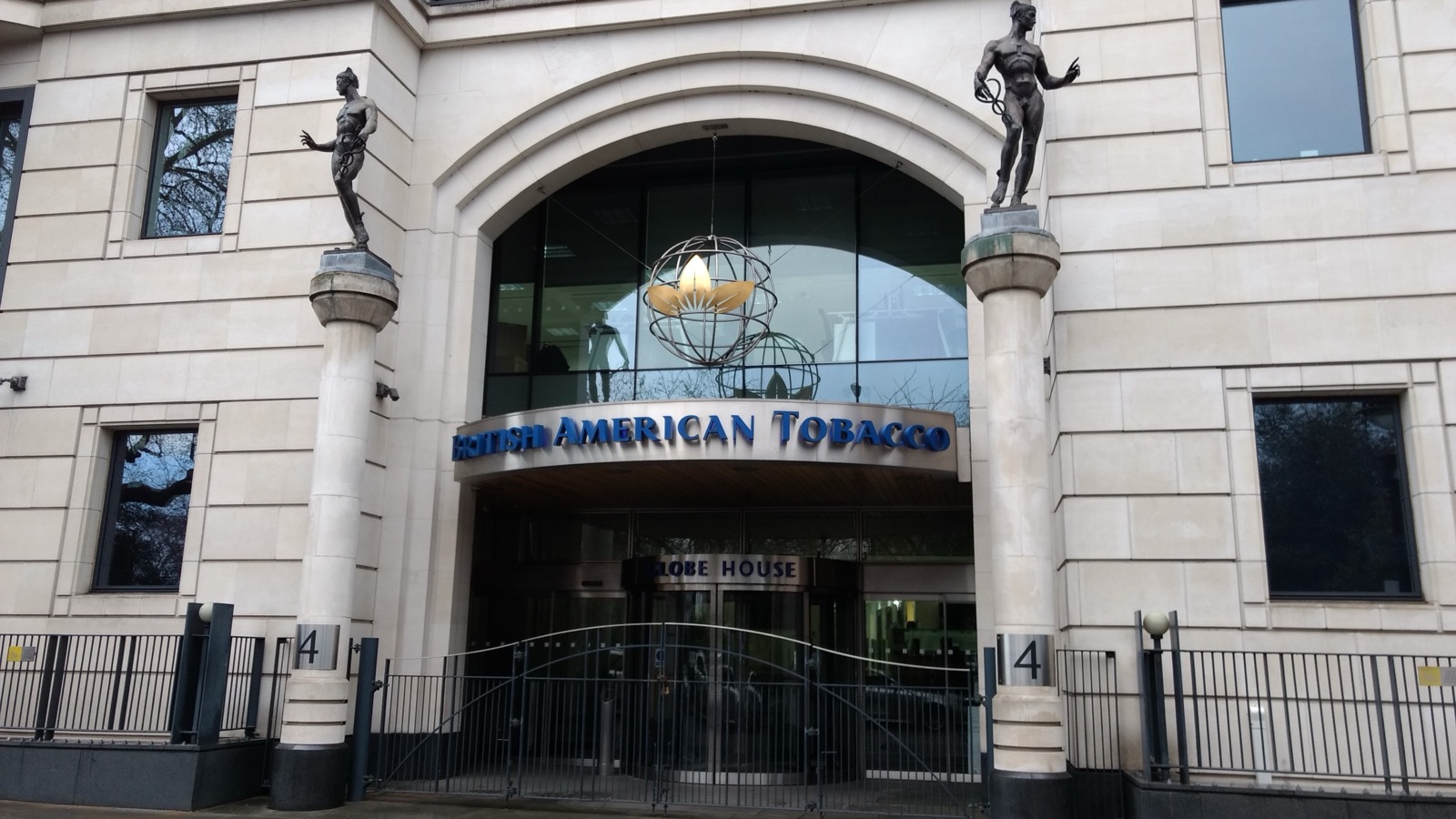
Featured image: Globe House, British American Tobacco, Temple Place, photographed by Philafrenzy via Wikimedia Commons, licensed under CC BY-SA 4.0. Cropped to 16:9. The image is illustrative and does not imply endorsement.