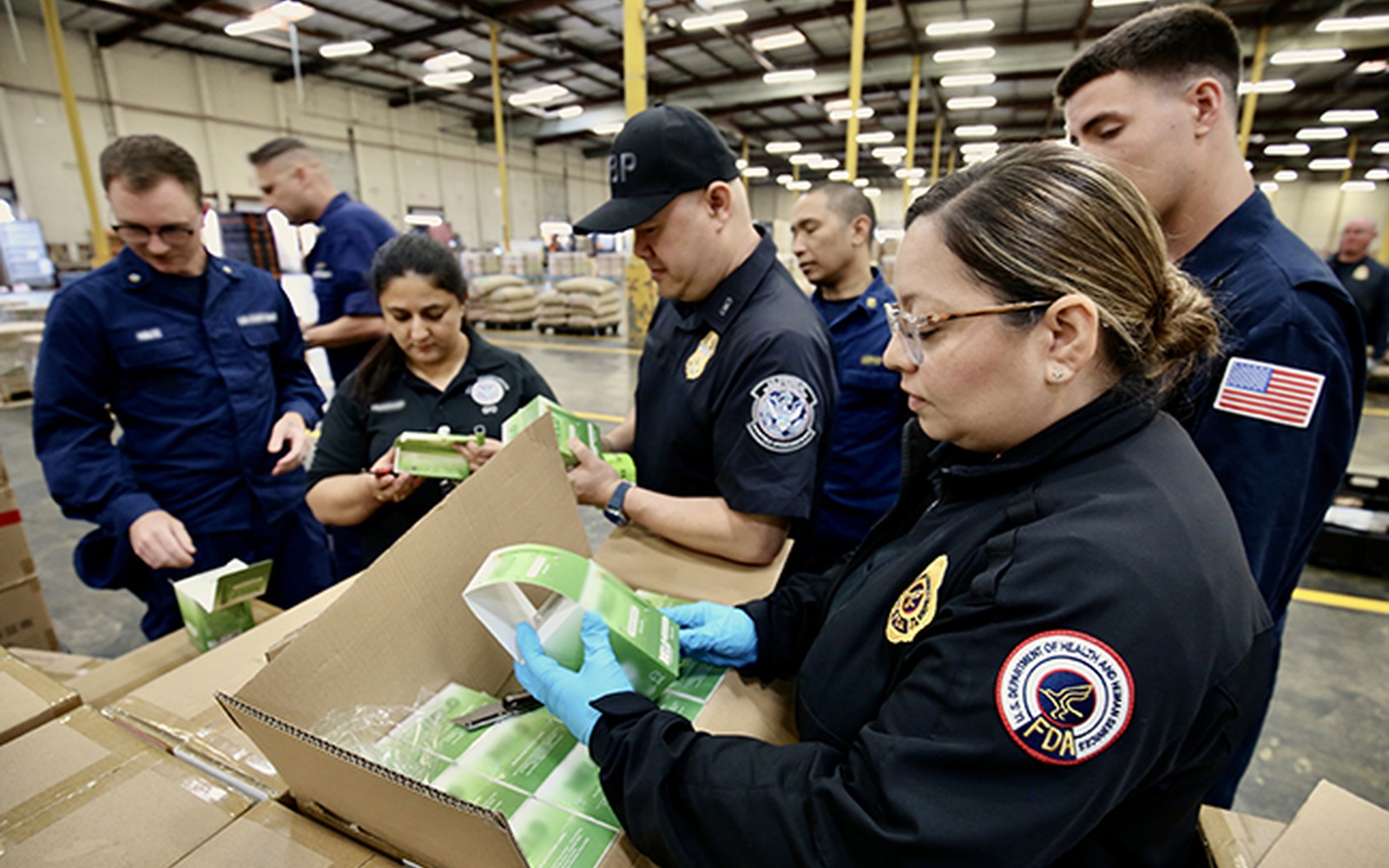
Quick answer: Operation Red Mist illegal vapes coverage matters because U.S. Customs and Border Protection said a joint federal operation seized more than 18 million electronic nicotine delivery system products, valued at over $175 million, from maritime cargo tied mainly to shipments from China. For vape retailers and importers, the practical risk is not only product authorization; it is also misdeclared cargo, hazardous-component handling, and whether a device can be traced to an FDA-authorized marketing order.
| Fact | Detail |
|---|---|
| Primary source | U.S. Customs and Border Protection national media release, May 13, 2026 |
| Jurisdiction | United States maritime cargo enforcement |
| Products named | Electronic nicotine delivery systems, commonly known as vapes |
| Scale reported | More than 18 million units, valued at over $175 million |
| Buyer / retailer relevance | Import records, supplier paperwork, FDA authorization status, and product-intake files need tighter review |
What did CBP say Operation Red Mist seized?
CBP said the operation, conducted with the U.S. Coast Guard and the U.S. Food and Drug Administration, targeted maritime cargo shipments and seized more than 18 million vape products. The agency framed the action as a supply-chain operation, not a single-store retail inspection.
The release says the operation focused mainly on cargo originating from the People’s Republic of China and on products that were allegedly imported, transported, or distributed outside lawful channels. CBP also said teams found hazardous materials that were misclassified or improperly labeled.
Why does this matter for vape retailers?
Operation Red Mist gives retailers a concrete reason to treat supplier verification as a front-line compliance task. A product can look commercially polished and still create risk if the shipment history, import coding, or premarket status is weak.
CBP said all e-cigarette products seized in the operation lacked FDA premarket authorization. Retailers should not treat a brand’s popularity, flavor menu, high-puff count, or distributor invoice as proof that a product can be legally marketed in the United States.
VapeRisk risk read
The risk signal is strongest for stores and distributors that rely on fast-moving disposable or pod inventory without a documented intake process. The key check is not “is this product common on shelves?” but “can this product be matched to a specific FDA authorization or a documented compliance position?”
For a practical baseline, VapeRisk readers can compare this story with our earlier guide to FDA ENDS enforcement priorities and our warning-sign guide on vape products disguised as everyday consumer goods.
What remains unverified?
The CBP release does not publish a complete product-by-product list, brand list, importer list, or final legal disposition for every shipment. It also does not prove that every visually similar product in the market came from the same supply chain. Retailers still need item-level documentation before making stocking decisions.
Buyer and retailer watch list
- Ask suppliers for product-specific FDA authorization or pending-application documentation where relevant.
- Keep purchase records, import documentation, product photos, and packaging records in a single intake file.
- Flag products with unusually high puff claims, childlike packaging, mislabeled components, or unclear manufacturer identity.
- Use VapeRisk’s counterfeit vape product checklist when a supplier record looks inconsistent.
FAQ
What did Operation Red Mist seize?
Operation Red Mist seized more than 18 million electronic nicotine delivery system products, commonly known as vapes, according to CBP’s May 13, 2026 release.
Does a seizure mean every similar vape is illegal?
No. A seizure does not automatically prove every visually similar vape is illegal, but it does show why retailers should verify each product’s authorization, supplier, and import record instead of relying on shelf popularity.
What should a retailer check first?
A retailer should first check whether the exact product can be tied to FDA authorization or another documented compliance position, then confirm the supplier’s import and product-identification records.