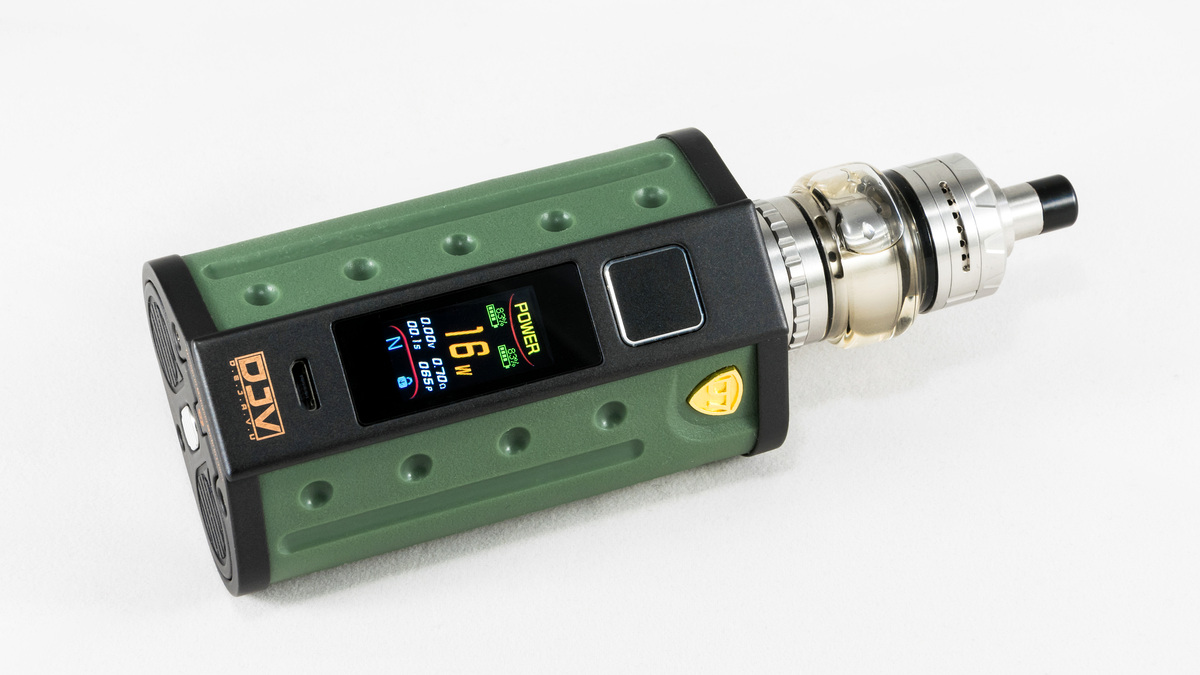
Quick answer: MTL means mouth-to-lung: vapour is drawn into the mouth before it is inhaled. DTL, also written DL, means direct-to-lung: the draw is inhaled more directly with a more open airflow. RDL means restricted direct-lung and sits between them. These labels describe draw style and system behaviour, not a universal safety, nicotine, coil-resistance or wattage rule. Choose by checking the exact device, pod or tank, coil range, airflow, liquid instructions and nicotine label rather than copying a generic number from another product.
Evidence disclosure: This is a source-led buyer guide, not a hands-on comparison of every MTL, RDL and DTL device. VapeRisk uses the terms as descriptive categories and treats manufacturer examples as attributed examples only. A device can move along the spectrum when its pod, coil, airflow or power setting changes, but only when the exact manufacturer instructions permit that combination.
MTL vs RDL vs DTL at a glance
| Feature | MTL | RDL | DTL / DL |
|---|---|---|---|
| Draw pattern | Into the mouth, then inhaled | Direct inhale with deliberate restriction | More direct inhale with open airflow |
| Typical airflow tendency | Tighter | Medium or restricted-open | More open |
| Typical vapour tendency | Lower volume | Moderate volume | Higher volume |
| Typical liquid use | Often lower | Often moderate | Often higher |
| Typical battery demand | Often lower | Often moderate | Often higher |
| Common device families | Tight-draw pods and lower-power kits | Adjustable pods, pod mods and compact tanks | Open-airflow tanks, pod mods and higher-output kits |
| What controls compatibility | The exact device, cartridge or tank, coil, stated power range, airflow, liquid guidance and nicotine label | ||
Every row describes a tendency, not a promise. A small pod is not automatically MTL, a low-resistance coil is not automatically DTL, and a product labelled “all styles” is not proof that every coil, liquid and power setting can be mixed safely.
What MTL vaping means
MTL is a two-stage inhale: first into the mouth, then into the lungs. The device usually creates a more restricted draw so a smaller amount of air moves through the vapour path. That can make the draw feel more controlled and can reduce vapour, liquid and battery use compared with a more open setup, but the outcome still depends on the exact product and how it is configured.
MTL is commonly associated with pod systems, compact kits and higher-resistance coils. Those associations are useful for orientation, not universal cutoffs. Modern mesh coils, adjustable airflow and automatic power control blur older rules. Check the printed coil range and the device manual before treating an ohm value as a category label.
What DTL or DL vaping means
DTL is a more direct inhale through a more open airflow path. A DTL system commonly moves more air and vapour per draw and may use more liquid and battery energy. The system needs a compatible coil, liquid feed, airflow and power range; opening the airflow on an unsuitable pod does not turn it into a stable DTL setup.
Manufacturer and retailer pages often describe DTL with words such as stronger flavour, bigger clouds or smoother performance. Those are promotional or subjective claims unless a disclosed comparison supports them. VapeRisk uses DTL only to describe the draw and system architecture.
Where RDL fits
RDL, or restricted direct-lung, describes a direct inhale with more restriction than a fully open DTL draw. It is useful because many adjustable pod systems do not sit cleanly at either extreme. Airflow position, pod or tank geometry, coil and power can move a device from tight MTL toward loose MTL, RDL and more open DTL behaviour.
VOOPOO’s published MTL/DL/RDL explainer describes RDL as the middle of the draw spectrum and uses exact VOOPOO devices as examples. That supports the category concept, but its resistance, product and performance statements remain manufacturer-specific. They should not be copied as universal setup rules.
How to choose between MTL, RDL and DTL
- Identify the exact product. Record the device, cartridge or tank, coil or pod version and manufacturer instructions. Similar-looking pods can use different airflow and power ranges.
- Choose the draw before the headline specification. Decide whether you prefer a tight, medium or open airflow. A high puff claim, large screen or mesh label does not answer that question.
- Match the complete system. Confirm that the coil or pod, airflow and power setting are intended to work together. Do not use a connector that merely fits as proof of compatibility.
- Read the liquid and nicotine label. Nicotine form, strength and base ratio are separate decisions. See VapeRisk’s nicotine salt vs freebase guide; do not transfer a strength recommendation from another device or market.
- Budget for liquid, battery and replacement parts. More airflow and vapour often increase liquid and energy use. Compare the actual pod, coil, battery and refill route rather than assuming a style is always cheaper.
- Check the market format. A draw style does not establish whether a product is refillable, reusable, notified, authorised or lawful in a particular market. Use the relevant product and jurisdiction evidence.
What changes in everyday use
| Reader question | MTL tendency | RDL tendency | DTL tendency | What to verify |
|---|---|---|---|---|
| How much liquid will it use? | Often less | Often between | Often more | Coil, power, draw length and liquid path |
| How often will it need charging? | Often less frequently | Depends heavily on setup | Often more frequently | Battery, output, coil and use pattern |
| How warm will it feel? | Often cooler | Often warmer | Can be warmer at higher output | Normal behaviour in the exact manual |
| How visible is the vapour? | Usually lower | Usually moderate | Usually higher | Airflow, output and draw |
| How portable or discreet is it? | Often easier | Varies | Larger systems can be less discreet | Actual dimensions, leakage control and carry instructions |
These are not VapeRisk measurements. They are directional expectations that help a buyer know which specifications and instructions to verify.
Can one device switch between styles?
Sometimes, but only within the combinations the manufacturer documents. Adjustable airflow can change draw restriction, while another compatible pod, coil or tank may change the usable range. VapeRisk’s adjustable-airflow explainer shows why a slider alone does not prove a meaningful range, and the mesh-coil claim guide explains why coil marketing does not replace disclosed architecture.
Do not force a cartridge, exceed its stated power range, enlarge an airflow opening or use an undocumented coil. If a product is sold in several versions, verify the exact version before following another owner’s setup advice.
Liquid, nicotine and coil labels are separate decisions
Search results often turn the MTL/DTL choice into a fixed table of nicotine strengths, PG/VG ratios, resistance values and wattage. That is too broad. Liquid viscosity affects wicking, nicotine delivery changes with the complete aerosol system, and jurisdictions set different product and label limits. Follow the exact product and liquid instructions.
Use VapeRisk’s rechargeable disposable vs pod-system guide to separate product architecture from draw style. A sealed rechargeable disposable and a refillable pod can both have a tight draw, but they present different replacement, evidence and waste decisions.
Mismatch symptoms and stop-use boundaries
- A repeated burnt taste or dry hit belongs in the burnt-taste decision guide, not an instruction to raise power or change liquid blindly.
- Persistent gurgling, mouthpiece liquid or leakage belongs in the leak decision guide.
- Unusual heat, swelling, damage, odor, sound, sparks, smoke or unexpected firing belongs in the battery-safety escalation guide.
- Do not keep drawing, charging or changing settings to test a damaged, leaking or unusually hot device.
Sources and evidence limits
- VOOPOO: What is MTL, DL and RDL? – manufacturer terminology and product examples; not a universal compatibility or safety rule.
- FDA: Tips to Help Avoid Vape Battery Fires or Explosions – follow exact manufacturer use and care instructions and stop on battery warning signs.
VapeRisk may consider evidence-led partnership proposals from device, coil, liquid-testing, battery, retail or quality-system organisations, but no partner can buy a compatibility statement, nicotine recommendation, safety conclusion, ranking or editorial outcome. See our Sponsorship Standards.
FAQ
Is MTL or DTL better?
Neither is universally better. MTL is a tighter two-stage draw; DTL is a more direct open draw; RDL sits between. The better fit depends on draw preference and the exact device, coil or pod, airflow, power and liquid instructions.
What is the difference between MTL, RDL and DTL?
MTL draws vapour into the mouth before inhaling. RDL uses a restricted direct inhale. DTL uses a more open direct inhale. They form a spectrum rather than three perfectly fixed device categories.
Is a pod vape always MTL?
No. Some pods are tight MTL, some support RDL, and some use different cartridges or airflow settings. Verify the exact pod, coil, power range and manufacturer description.
Can I use one vape for both MTL and DTL?
Only when the manufacturer documents compatible pods, coils, tanks, airflow and power settings for those styles. Adjustable airflow or a fitting connector alone does not prove compatibility.
Does coil resistance decide whether a vape is MTL or DTL?
Not by itself. Resistance interacts with coil design, power, chamber, airflow and liquid feed. Use the exact stated range rather than a universal ohm cutoff.
Does DTL use more e-liquid and battery?
It often does because an open, higher-output setup can move more air and vapour, but actual use depends on the device, coil, power, draw length and use pattern. It is a tendency, not a measurement promise.
Is MTL safer than DTL?
VapeRisk does not treat either draw style as universally safer. Risk depends on the product, liquid, aerosol delivery, use, condition and market controls. Follow exact instructions and stop using a damaged, leaking or unusually hot device.