
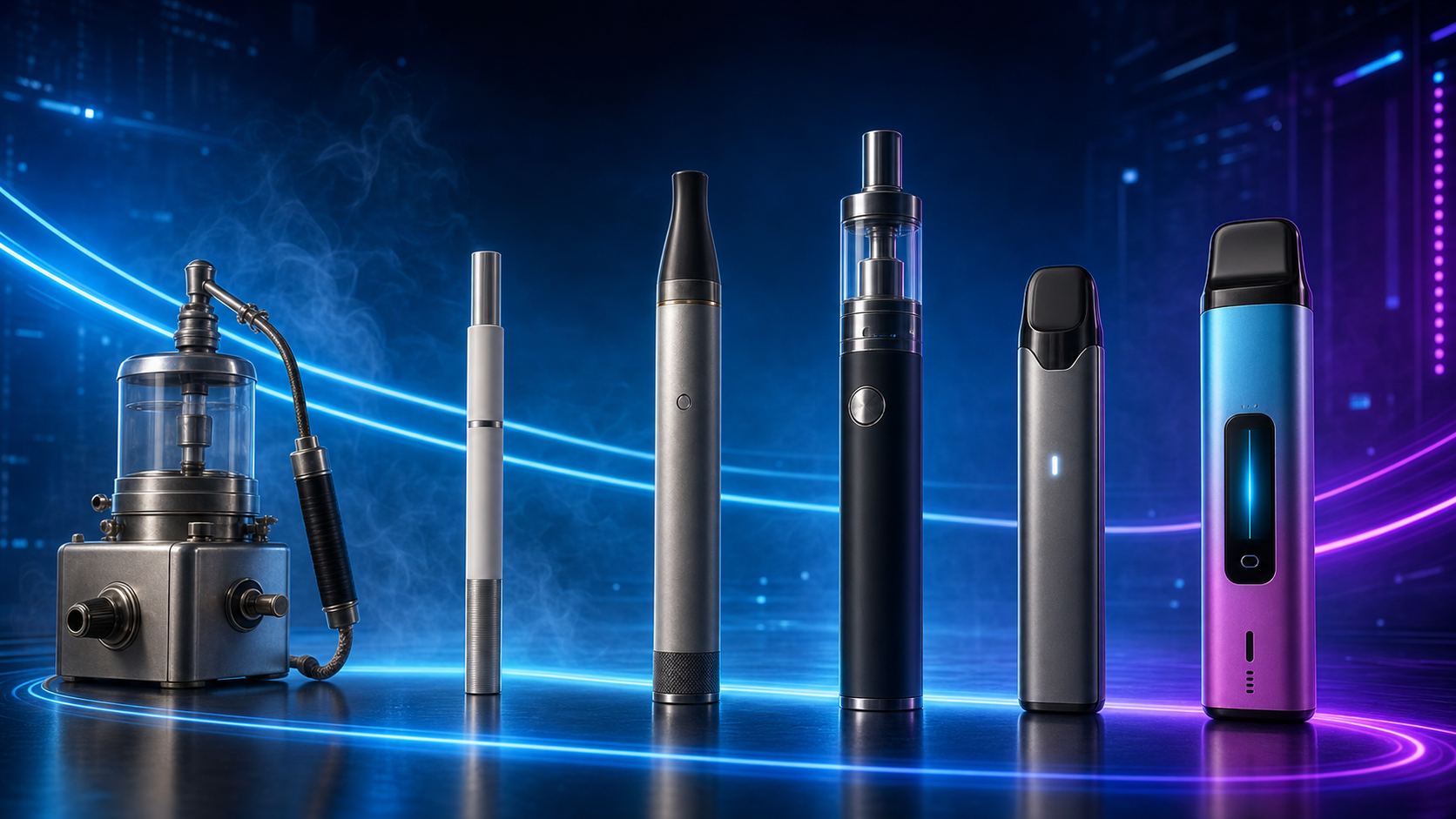
Ideas before a market
The object existed before the category.
Long before a nicotine industry formed, inventors and researchers separated aerosol from combustion.
Joseph Robinson files an electric-vaporizer patent.
His device heated medicinal compounds for inhalation. It proves portable electrical aerosolization predates the e-cigarette, not that Robinson invented a nicotine vape.
Read the complete historyFull chapter transcript 4 turning points · 4 named actors
Long before a nicotine industry formed, inventors and researchers separated aerosol from combustion. These records are ancestors, not proof of a continuous product lineage.
Electrical heating, flavored air, and nicotine aerosol were separate experiments. No shared cartridge, battery, atomizer, or supply chain yet existed.
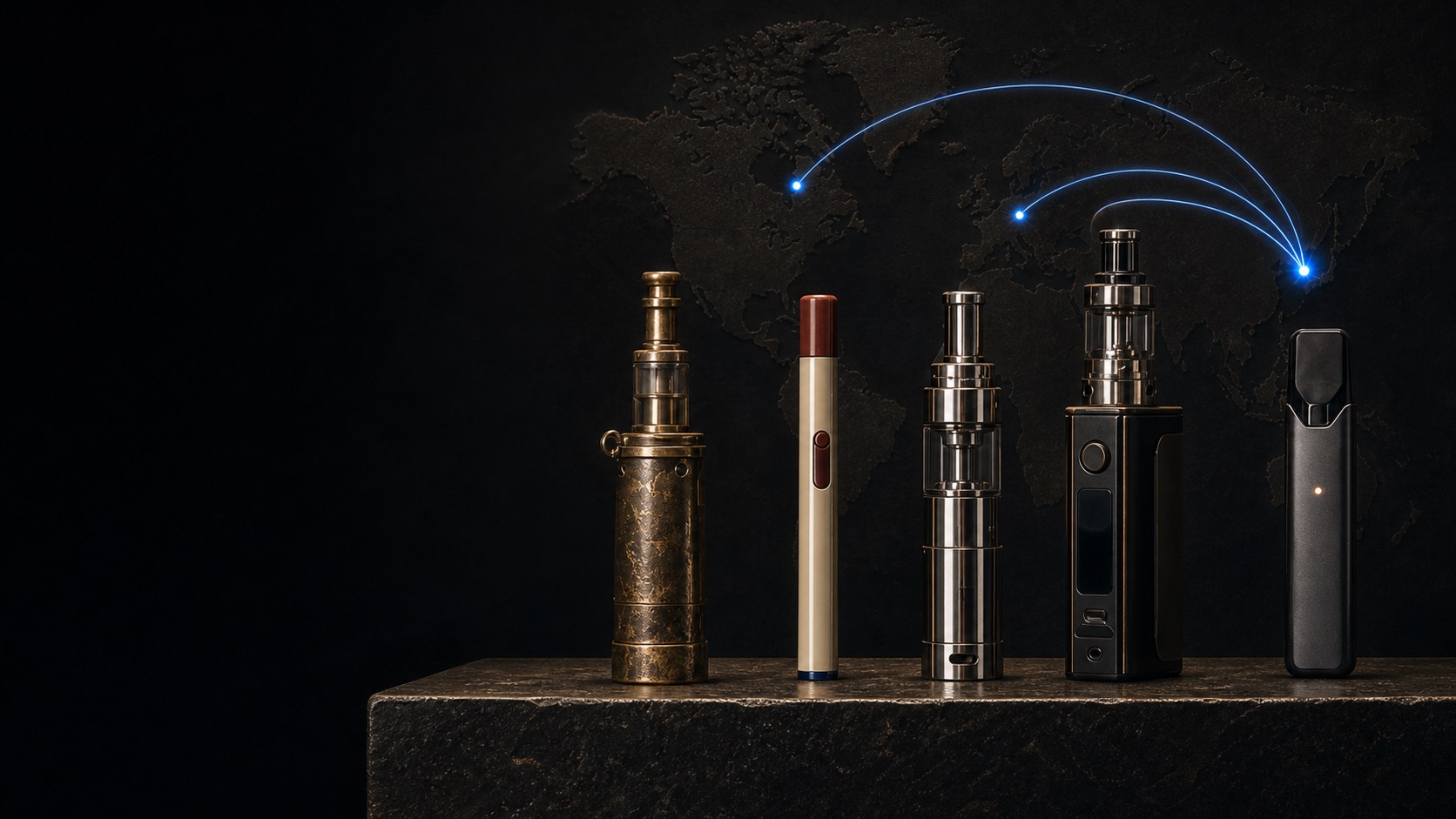
The surviving record is concentrated in the United States. There was no global vapor market to map—only disconnected ideas waiting for batteries, materials, and manufacturing to catch up.
Before brands, four people and products tested the premise.
Joseph Robinson
A 1927 patent solved portable electrical aerosolization for medicinal compounds. It supplied a technical ancestor, but not a nicotine liquid, cartridge system, consumer brand, or manufacturing chain.
Open the recordHerbert A. Gilbert
Gilbert described heated, moist, flavored air in 1963. The drawings look strikingly modern; the missing story is commercialization. The idea arrived before batteries, materials, regulation, and distribution could make a category.
Open the recordPhil Ray & Norman Jacobson
Their 1979 nicotine-aerosol work helped separate nicotine use from smoke and helped popularize the language later used by an industry, while remaining outside the modern product lineage.
Open the recordFavor
Advance Tobacco Products brought a non-combustible nicotine product to market in 1985. Its short life showed that a clever object alone could not create the refill, retail, trust, and regulatory system a category needs.
Open the recordEvery date, actor, consequence and evidence boundary.
Nothing from the historical record is removed by the visual chapter above. Every step remains linked to a patent, filing, law, regulator, study, or clearly labelled company record.
-
01
Joseph Robinson files an electric-vaporizer patent.
His device heated medicinal compounds for inhalation. It proves portable electrical aerosolization predates the e-cigarette, not that Robinson invented a nicotine vape.
US1775947A -
02
Herbert Gilbert proposes a smokeless, non-tobacco cigarette.
The patent replaced burning tobacco with heated, moist, flavored air. The drawings are real; mass production and adoption are not established by the patent.
US3200819A -
03
Phil Ray and Norman Jacobson test nicotine aerosol.
Their work is remembered for a smoke-free nicotine inhalation experiment and for helping popularize “vaping” as a term, while remaining outside the later commercial e-cigarette chain.
Historical review -
04
Favor reaches the market—and fails to create a category.
Advance Tobacco Products marketed a non-combustible nicotine product. Short commercial life and a different delivery architecture make it a precursor, not the start of the modern industry.
Peer-reviewed history
Joseph Robinson files an electric-vaporizer patent.
His device heated medicinal compounds for inhalation. It proves portable electrical aerosolization predates the e-cigarette, not that Robinson invented a nicotine vape.
Herbert Gilbert proposes a smokeless, non-tobacco cigarette.
The patent replaced burning tobacco with heated, moist, flavored air. The drawings are real; mass production and adoption are not established by the patent.
Phil Ray and Norman Jacobson test nicotine aerosol.
Their work is remembered for a smoke-free nicotine inhalation experiment and for helping popularize “vaping” as a term, while remaining outside the later commercial e-cigarette chain.
Favor reaches the market—and fails to create a category.
Advance Tobacco Products marketed a non-combustible nicotine product. Short commercial life and a different delivery architecture make it a precursor, not the start of the modern industry.