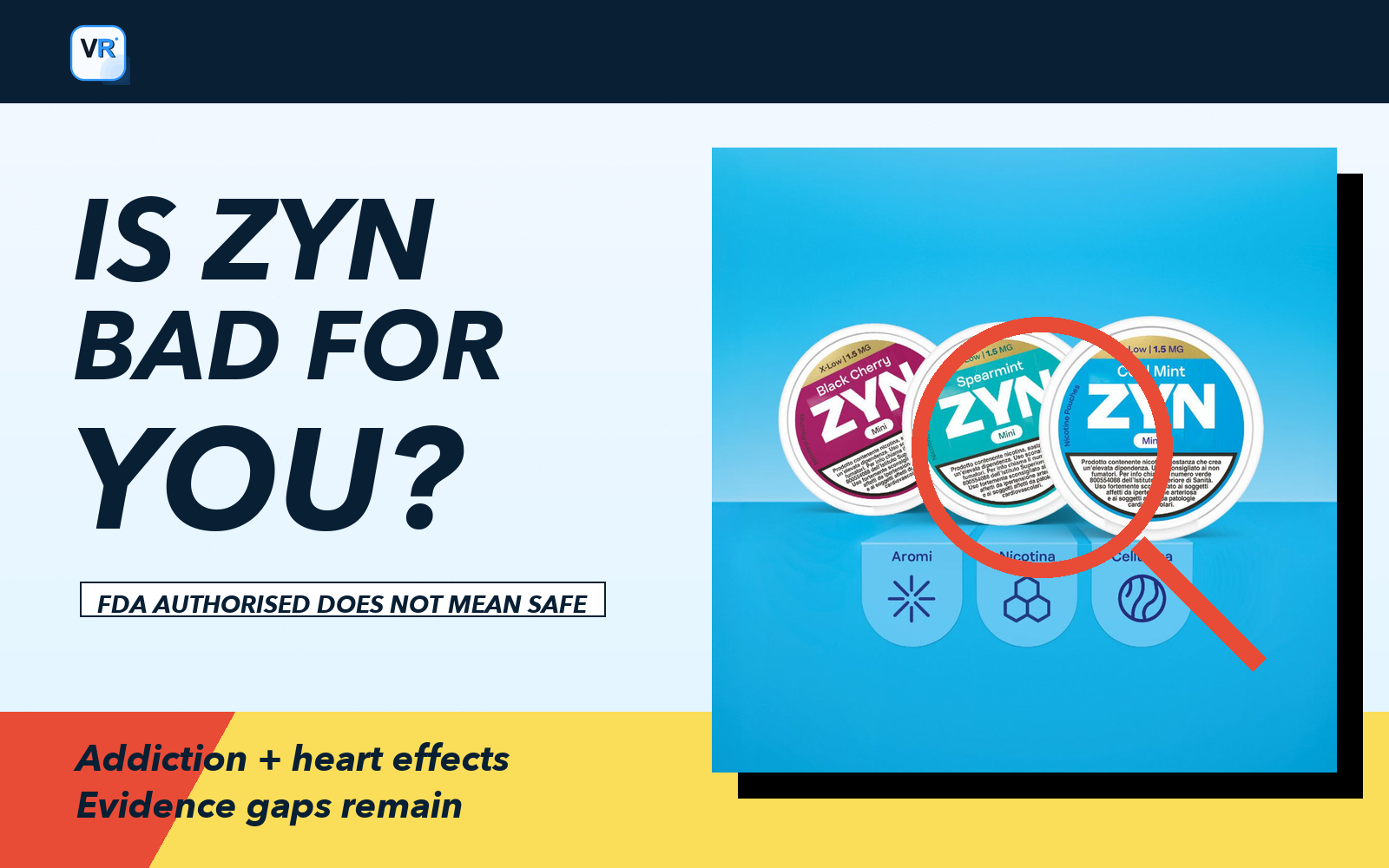
ZYN is marketed like a clean switch and attacked like a moral panic. The evidence sits in the middle: less exposure than cigarettes, not safe.
Quick answer: ZYN is a nicotine pouch brand with 20 specific products authorised by the US FDA in January 2025. That authorisation matters because FDA concluded those products can expose adult users to lower levels of harmful constituents than cigarettes and may benefit adult smokers who switch completely. But FDA authorisation is not FDA approval and it is not a safety stamp. ZYN still delivers addictive nicotine, can affect heart rate and blood pressure, can irritate the mouth, and should not be used by non-smokers, youth, pregnant people or anyone trying to be nicotine-free.
What the FDA actually authorised
The FDA authorised 20 ZYN products through the PMTA pathway in January 2025. The decision applies to specific listed products and strengths, not every ZYN item and not every nicotine pouch on the market. FDA also says the authorisation does not allow reduced-risk claims unless a separate modified-risk order is granted.
That is the most important distinction for readers: “authorised for sale” means FDA judged the listed products met the legal public-health standard compared with the alternatives and the population risks. It does not mean “safe,” “healthy,” or “FDA-approved.”
What ZYN does not fix
- Addiction: ZYN delivers nicotine, and nicotine dependence is the most predictable risk.
- Cardiovascular effects: nicotine can raise heart rate and blood pressure regardless of how it is delivered.
- Oral irritation: under-lip products can irritate gums and oral tissue.
- Pregnancy risk: nicotine crosses the placenta and is not appropriate during pregnancy unless directed by a clinician.
- Evidence gaps: long-term independent pouch-specific evidence is still limited.
- Product-quality concerns: public-health organisations have flagged harmful chemicals or metals in some pouch products; risks vary by product and market.
The youth-risk question
FDA says youth use of pouches remained lower than youth e-cigarette use in 2024, but it is still a live monitoring issue. The 2024 National Youth Tobacco Survey found 1.8% of middle and high school students, about 480,000 students, reported current pouch use. Among current youth pouch users, ZYN was the most commonly reported brand. That is why ZYN’s authorisation came with marketing restrictions aimed at adult audiences aged 21 and older.
So, is ZYN bad for you?
If you are an adult smoker who switches completely from cigarettes to an authorised ZYN product, the evidence supports a lower-exposure argument compared with smoking. If you do not already use nicotine, ZYN is a bad trade: it can create dependence without removing a prior smoking risk. If you are trying to quit nicotine altogether, ZYN keeps nicotine in the loop.
Sources reviewed
- FDA list of authorised nicotine pouch products
- FDA ZYN authorisation announcement
- FDA 2024 National Youth Tobacco Survey summary
- American Cancer Society explainer on nicotine pouches and cancer risk
- American Lung Association summary of emerging nicotine products
FAQ
Is ZYN bad for you?
ZYN is lower-exposure than cigarettes for adult smokers who switch completely, but it is not safe. It delivers addictive nicotine and may carry oral, cardiovascular and product-quality risks.
Did the FDA approve ZYN as safe?
No. The FDA authorised 20 specific ZYN products for US sale in January 2025. The FDA says authorisation does not mean the products are safe or FDA-approved.
What are the side effects of ZYN?
Likely effects include nicotine dependence, raised heart rate or blood pressure, and gum or mouth irritation. Long-term pouch-specific evidence is still limited.
Is ZYN safer than vaping or smoking?
It is very likely lower-exposure than smoking for an adult who switches completely. Compared with vaping, it avoids inhalation but still has nicotine-related risks. See are nicotine pouches safer than vaping?
General information, not medical advice. To stop smoking or using nicotine, speak to a healthcare professional or your local stop-smoking service.